
If you’re planning to install a monument sign, one of the first questions you should ask is: “Do I need a permit?”
The short answer is usually yes—but monument sign permits are generally regulated at the local level, not by a single statewide rule. Depending on your property, the requirements may come from your city, county, zoning department, planning department, building department, or local sign ordinance.
That means there really isn’t a one-size-fits-all “state-by-state” permit guide. The requirements can change from one city or county to the next.
Before you order a sign, check with the local government that has jurisdiction over your property. This is important regardless of which sign company you use.
Finding out the requirements before you design, purchase, or manufacture your monument sign can prevent expensive surprises—and may keep you from purchasing a sign that is larger, more complicated, or more expensive than your property allows.
City or County: Who Regulates Your Monument Sign?
The first thing to determine is whether your property is inside city limits or in an unincorporated county area.
If you’re inside a city, the city will typically have its own zoning and sign regulations. If you’re outside city limits, the county may regulate your sign.
The requirements can be very different.
In many areas, city properties have different sign heights, setbacks, allowable sign areas, and design requirements than properties located along county roads or in unincorporated areas.
Always verify the requirements for your specific property before purchasing or manufacturing a monument sign.
How Does the Monument Sign Permit Process Work?
Although every municipality is different, there are several requirements commonly involved in obtaining a monument sign permit.
Here are some of the most common items you may be asked to provide.
1. Online Permit Application
Many cities and counties now use online permitting systems.
You’ll typically create an account, start a sign permit application, and upload the required documents. Depending on the municipality, you may need to provide drawings, property information, contractor information, engineering documents, photographs, and other supporting materials.
After submitting the application, the plans may go through one or more rounds of review.
Be prepared to log back into the permitting portal to check for:
● Plan review comments
● Requests for additional information
● Corrections
● Permit fees
● Approval status
● Inspection requirements
Unfortunately, some municipal permitting websites can be difficult to navigate, and getting someone on the phone for assistance isn’t always easy.
That’s one reason having an experienced monument sign manufacturer involved can be extremely helpful.
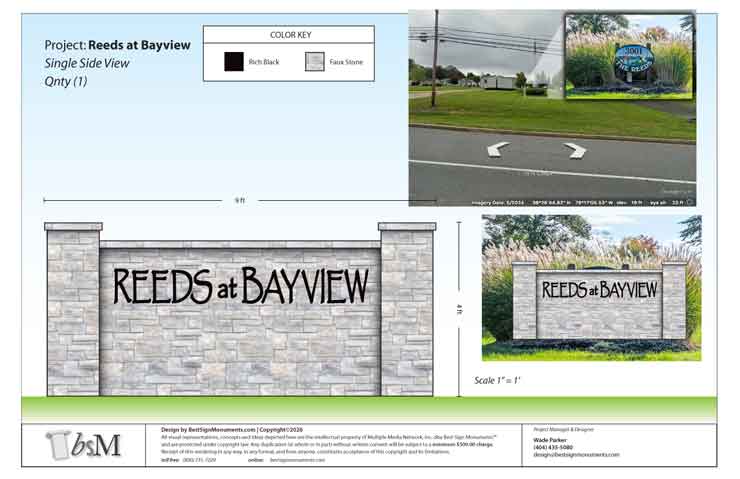
2. Scaled Color Rendering of the Sign
A municipality will often want to see exactly what the proposed monument sign will look like before approving it.
This is typically provided as a scaled color rendering showing the proposed:
● Sign dimensions
● Height
● Width
● Shape
● Colors
● Materials
● Lettering
● Logos
● Decorative elements
● Overall appearance
Some jurisdictions specify the size or format of the drawing, such as tabloid-size paper.
The drawing is important because the city or county uses it to determine whether the proposed sign complies with the local sign ordinance.
Why does sign height matter?
Sign height restrictions aren’t simply about appearance.
Local governments may limit sign height to help protect driver visibility, sight distances, pedestrians, and traffic safety. Maximum heights also help maintain a consistent appearance throughout a commercial area or community.
3. Property Location, Setbacks and Right-of-Way
The proposed location of your monument sign is one of the most important parts of the permit application.
You generally cannot assume that the area between your building and the road is available for a permanent sign.
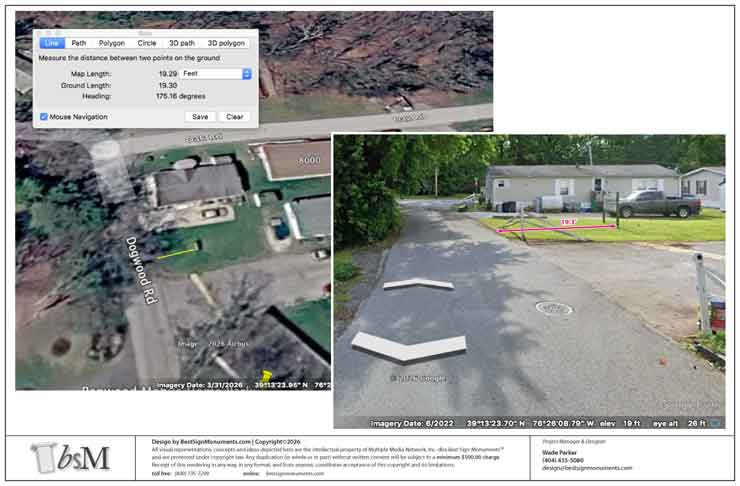
A monument sign must be located on property where signage is allowed and must comply with the required setback from the property line or right-of-way.
What is a sign setback?
A setback is generally the required distance between the property line or applicable right-of-way and the sign.
The required distance can vary significantly depending on the jurisdiction, road classification, zoning district, and type of sign.
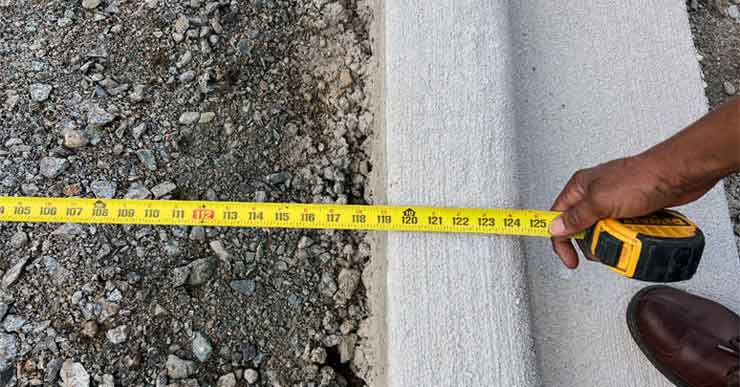
Never assume that the edge of pavement is the property line.
There may be a public right-of-way between your property and the road.
Installing a permanent sign within a Department of Transportation or other public right-of-way can create serious problems, particularly if the road is later widened or modified.
Local setback requirements can also help maintain adequate visibility for drivers entering and leaving a property.
4. Sign Materials and Hardware
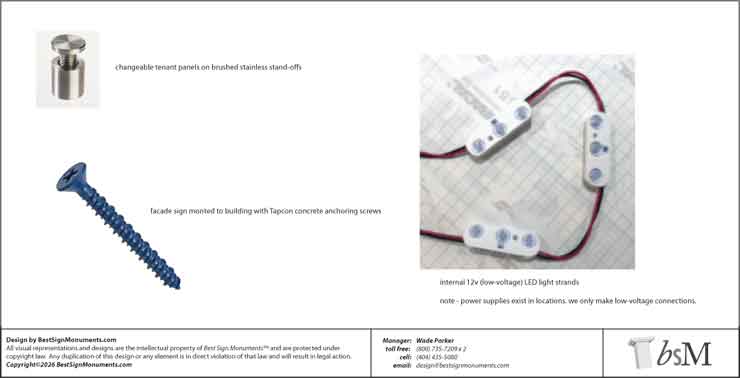
Some jurisdictions require the permit drawings to identify the materials that will be used to construct the monument sign.
This may include:
● Sign cabinet materials
● Stone, brick, or masonry
● Aluminum
● Steel
● PVC or other approved materials
● Paint or finishes
● Structural components
● Fasteners
● Anchors
● Hardware
The purpose is to ensure that the finished sign meets local standards for durability, safety, appearance, and construction.
A sign may look great on paper, but the municipality may still require specific materials or construction methods.
5. Concrete Footer and Structural Requirements
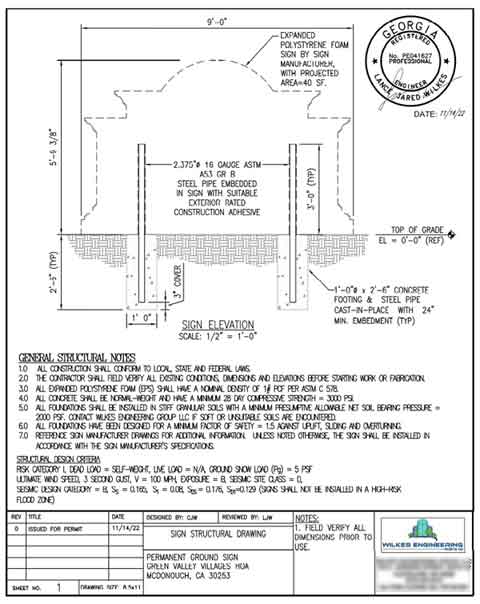
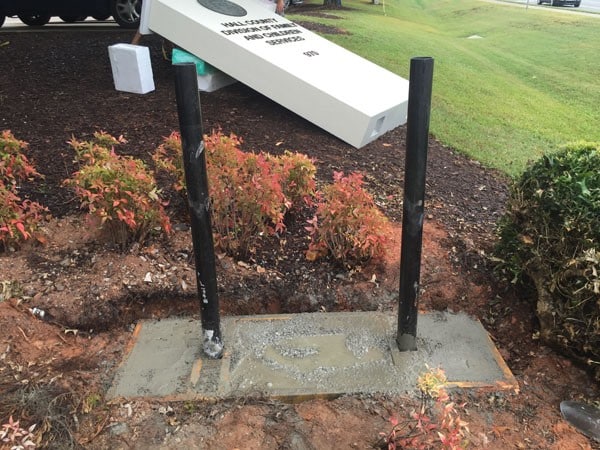
For monument signs supported by steel posts or other structural components installed below grade, the permit application may require a foundation or concrete footer drawing.
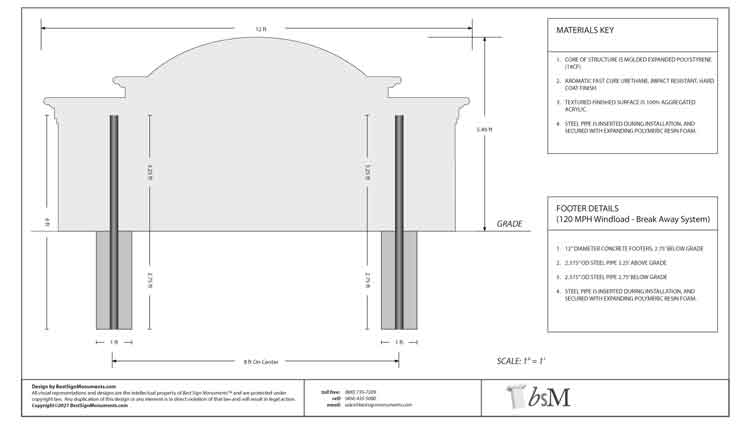
The plans may need to show:
● Footer diameter or dimensions
● Footer depth
● Number of footers
● Spacing between footers
● Post size
● Embedment depth
● Structural connections
The required foundation can depend on factors such as:
● Local soil conditions
● Wind speed
● Sign size
● Sign height
● Exposure
● Frost depth
● Local building codes
● Geographic location
In some jurisdictions, a licensed structural engineer may be required to prepare or approve the structural calculations.
This is particularly important for larger signs and locations subject to significant wind loads, including hurricane-prone areas.
Engineering can add to the cost of a project, so it is smart to determine whether it will be required before you finalize your monument sign design.
6. Sign Face and Graphic Area
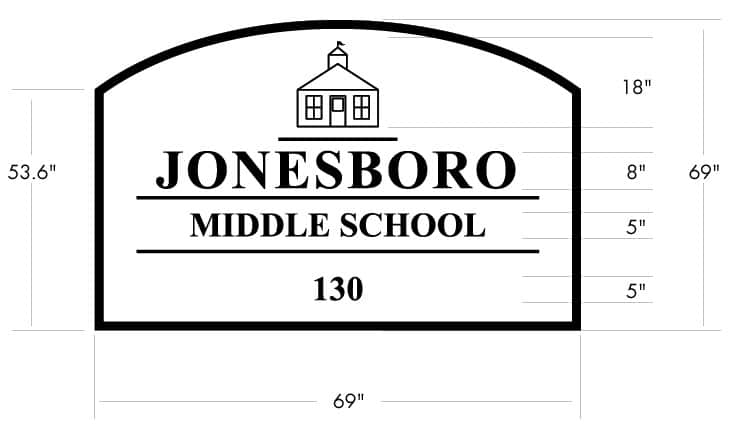
One commonly overlooked part of a monument sign permit is the amount of sign area or graphic area allowed.
The municipality may regulate the overall sign area and/or the area occupied by lettering, logos, and other graphics.
For example, the local ordinance may establish a maximum number of square feet of sign area based on factors such as:
● Property frontage
● Building frontage
● Zoning district
● Road frontage
● Type of business
● Number of tenants
● Number of signs allowed
Every municipality is different.
Some locations may allow a relatively large monument sign, while another jurisdiction may limit the sign to a much smaller area.
This is one of the reasons you should not order a monument sign based solely on what looks appropriate for the property.
The sign needs to fit the local ordinance—not just the property.
7. Licensed Sign Contractor Requirements
Some cities and counties require the installation to be performed by a licensed contractor or properly registered sign contractor.
The exact requirements vary by jurisdiction.
In some areas, the property owner may be able to perform certain work themselves. In others, the municipality may require a licensed contractor to pull the permit and perform the installation.
Before starting work, determine:
1. Who is allowed to apply for the permit?
2. Does the contractor need a local business license?
3. Is a contractor license required?
4. Does the installer need to be registered with the city or county?
5. Are separate electrical licenses required for illuminated signs?
Getting these questions answered early can prevent delays later.
8. Monument Sign Permit Fees
Permit fees vary widely between municipalities.
Depending on the location, you may encounter:
● Flat permit fees
● Plan review fees
● Building permit fees
● Electrical permit fees
● Engineering review fees
● Inspection fees
● Fees based on the value of the sign
Some municipalities have relatively simple fee structures, while others may charge several different fees during the review process.
Ask the permitting department for the current fee schedule before submitting your application.
9. Inspections
A monument sign permit doesn’t necessarily mean you can simply install the sign and walk away.
Some jurisdictions require inspections during construction.
For example, if the sign is supported by underground concrete footers, the municipality may require a footer inspection before the concrete is poured.
The inspector may verify:
● Footer diameter
● Footer depth
● Post spacing
● Reinforcement
● Location
● Required setbacks
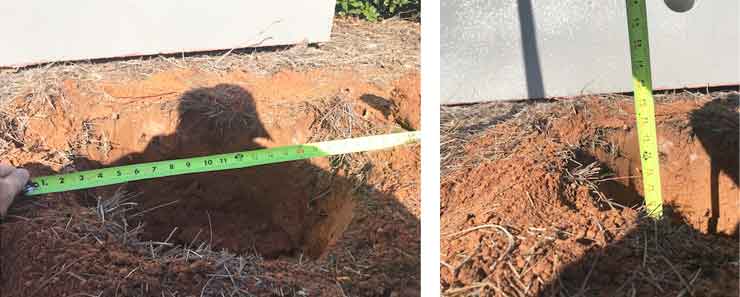
Once the footer inspection is approved, you can proceed with the installation according to the approved plans.
A final inspection may then be required after the sign is installed.
The inspector may verify that the completed sign:
● Is located where approved
● Matches the approved plans
● Meets required setbacks
● Is securely installed
● Meets applicable construction requirements
Not every municipality follows the same inspection procedure, so always follow the instructions provided with your permit.
Don’t Buy a Monument Sign Before Checking Your Local Requirements
One of the biggest mistakes a property owner can make is designing and purchasing a monument sign before determining what the local government will allow.
Imagine ordering a beautiful custom monument sign only to discover that:
● It’s too tall.
● The sign face is too large.
● The setback is insufficient.
● The proposed location is in the right-of-way.
● The foundation requires engineering.
● The materials aren’t approved.
● The graphics exceed the allowable area.
● The installation requires a licensed contractor.
Those problems can potentially cost you time and money.
That’s why the smartest approach is to determine the local requirements first.
Can a Monument Sign Manufacturer Help With the Permit Process?
Yes.
At Best Sign Monuments, we understand that purchasing a monument sign is about more than simply manufacturing the sign.
The permitting process can be confusing, especially when every city and county seems to have a different set of requirements.
We can help you understand what information may be needed for your project and provide the drawings and sign specifications necessary to help move the permit process forward.
Because we manufacture monument signs directly, working with the manufacturer can also help eliminate unnecessary markups and reduce the risk of ordering something that doesn’t fit your property’s requirements.
The goal isn’t simply to sell you a sign. It’s to help you get the right sign for your property and your local requirements.
Final Thoughts: Check With Your City or County First
So, do monument signs require permits?
In many locations, yes—but there is no universal answer that applies to every property.
Monument sign regulations are typically determined by the local jurisdiction, which may be your city or county.
Before purchasing your sign, contact the appropriate local permitting or planning department and determine:
● Whether a permit is required
● Where the sign can be located
● Maximum sign height
● Maximum sign area
● Required setbacks
● Allowed materials
● Structural requirements
● Foundation requirements
● Engineering requirements
● Contractor requirements
● Permit fees
● Inspection requirements
Do this before you order your monument sign.
At Best Sign Monuments, we can help you through the process and provide a professionally manufactured monument sign designed around your project’s requirements.
Don’t let permitting red tape stop you from improving your property’s appearance, visibility, and value.
Contact Best Sign Monuments today and let us help you build the right monument sign for your property.
Frequently Asked Questions
Do monument signs always require a permit?
No single rule applies everywhere. Permit requirements are generally determined by the local city or county and can vary based on the property’s location, zoning, sign type, size, and other factors.
Does the state issue monument sign permits?
Generally, monument sign permits are handled at the local level rather than through one statewide permitting process. However, state transportation agencies may have requirements involving signs near state-maintained roads or within public rights-of-way.
How far does a monument sign have to be from the road?
There is no universal setback distance. The required setback depends on the local ordinance, property line, right-of-way, zoning district, road classification, and other factors.
Can I install a monument sign in the road right-of-way?
Generally, you should not assume that a public right-of-way can be used for a permanent private monument sign. Always verify the property line and right-of-way with the appropriate local or transportation authority before installation.
Do monument signs require engineering?
Some do. Larger signs, taller structures, certain foundation designs, and locations with significant wind or other structural requirements may require calculations or approval from a licensed structural engineer.
Can I install my own monument sign?
That depends on local regulations. Some jurisdictions have contractor licensing, registration, or permit requirements that determine who can perform the work.
How long does a monument sign permit take?
There is no universal timeline. Permit processing times vary by municipality and can depend on the completeness of the application, plan review workload, engineering requirements, zoning issues, and whether corrections are requested.
What should I do before ordering a monument sign?
Check with your local city or county first. Find out exactly what the property is allowed to have, including sign height, size, location, setbacks, materials, foundation requirements, and graphics area.
That one step can save you significant time and money.
Best Sign Monuments
Custom Monument Signs • Commercial Signs • Direct Manufacturer
If you need help determining what type of monument sign may work for your property, contact Best Sign Monuments before you order.

Get Started Now
Best Sign Monuments is ready to help enhance the look and feel of your property. By working with our expert designers, you will have full capability to customize all of your signage.
At Best Sign Monuments, we deliver products that live up to our name. We use only the best materials and employ only the best artists. For the quality you will receive, we offer the best pricing. Most importantly, we treat each project as if we were paying for it ourselves. See what others have to say in our testimonials.
Custom monument signs provide a sense of distinction and permanence to your property. Our sign monuments are the style most desired and required by municipalities nationwide for an all over better looking community. With over (2) decades of nationwide success, we will make You Look Your Best!
You can read more on our page How To Install A Sign Monument.
See how much you are saving! This is a real quote from a local franchise (who does not make our product) just to install a two hole monument:
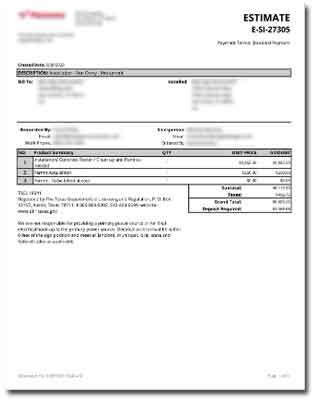
Click Above To See A Sign Shop Install Estimate – DO IT YOURSELF AND SAVE THOUSANDS!
If you still do not feel comfortable doing this yourself, ask you sales representative for suggestions. We have a wide network and ideas to save you money.
We love what we do, and we are grateful for the opportunity to serve and
better your community.